Industry Accomplishment

Launching into tomorrow: NRIC guides new era of research and deployment

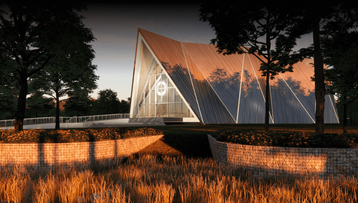
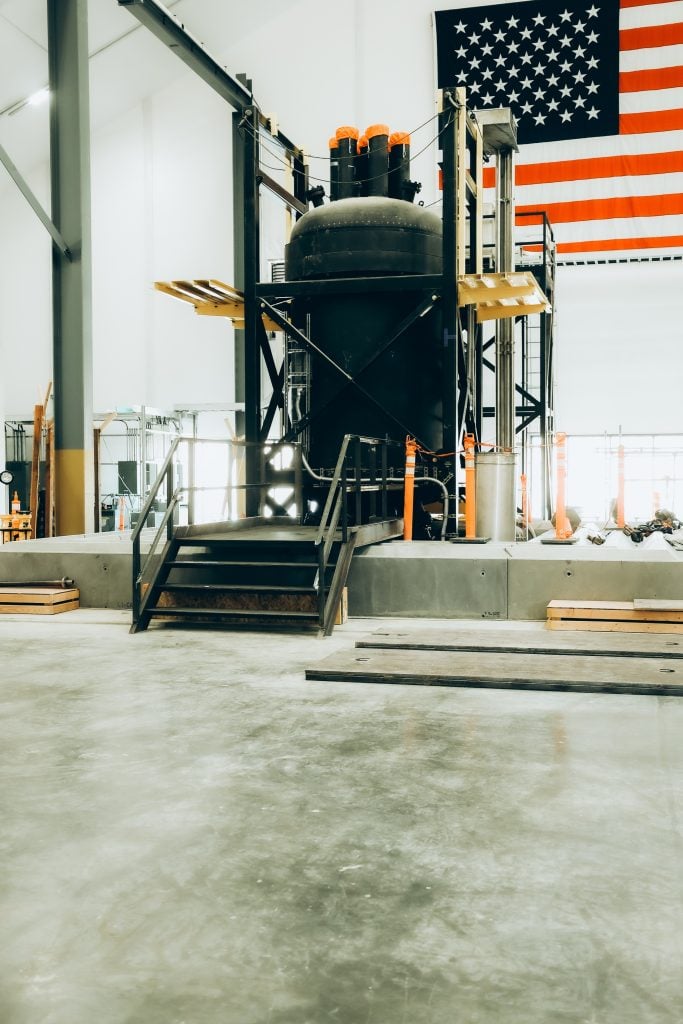
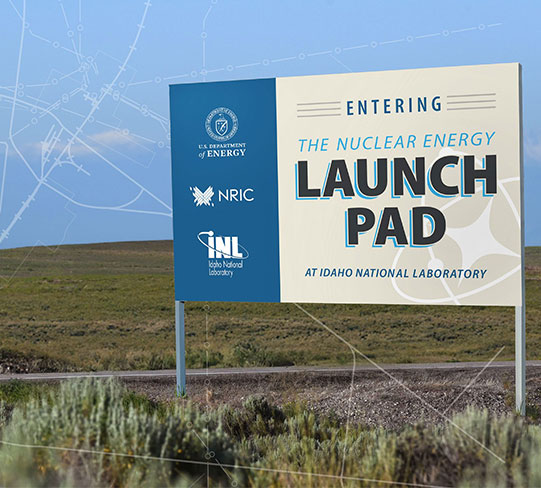
As part of Idaho National Laboratory, NRIC has a variety of test beds, programs, and initiatives designed to take nuclear technologies from concept to commercialization, including the Demonstration of Microreactor Experiments (DOME) test bed, now officially open for business (see p. 44 for more on DOME).

Centrus, Oklo HALEU agreement to support reactor deployment

US enrichment company Centrus is to supply Oklo with high-assay low-enriched uranium to power up to five Aurora powerhouses for multiple years, with deliveries scheduled to begin in 2029.

In a first for advanced nuclear: Siemens Energy turbine package advances for Oklo’s Aurora-INL

The steam turbine and generator package for Oklo’s first Aurora powerhouse at Idaho National Laboratory (INL)—a pioneering application of a commercially established industrial turbine platform at the heart of a first-of-a-kind advanced reactor’s conventional island—is in active production at Siemens Energy’s facilities in Görlitz and Erfurt, Germany.

Department of Energy celebrates second advanced reactor achieving criticality

The U.S. Department of Energy (DOE) celebrated another historic milestone in America’s nuclear renaissance. DOE Reactor Pilot Program participant Valar Atomics’ advanced reactor design, Ward 250, successfully completed a zero-power fueled criticality demonstration. The experiment took place at the Utah San Rafael Energy Lab in Emery County, Utah, and marks the first DOE authorized reactor built outside of a national laboratory.

Deployable Energy receives final safety approval ahead of criticality

Deployable Energy announced approval of its Documented Safety Analysis (DSA) by the U.S. Department of Energy earlier this month, representing another regulatory milestone before proceeding to criticality.

Oklo secures DOE PDSA approval

Oklo announced that the Department of Energy’s Idaho Operations Office had approved the preliminary documented safety analysis (PDSA) for the company’s first deployment of its Aurora Powerhouse, which is currently under construction at Idaho National Laboratory.

Idaho National Lab’s historic milestone: Antares R1 Mark-0 reactor project breaks ground of 50-year legacy

For the first time in nearly 50 years, the laboratory is moving toward the deployment of a new reactor project, the Antares R1 Mark-0. It is a moment that forces us to reconcile the ghosts of mid-century nuclear ambition with the urgent, high-stakes requirements of a 21st-century power grid.

Antares Mark-0 becomes first advanced nuclear reactor to achieve criticality under DOE Pilot Program

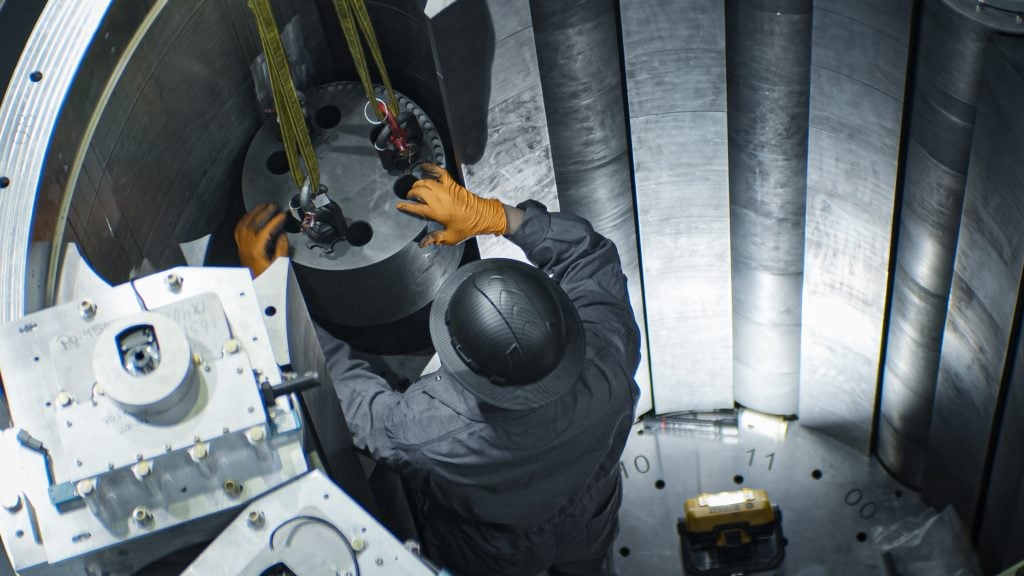
Antares Nuclear Inc.’s Mark-0—a sodium heat-pipe-cooled microreactor fueled by high-assay low-enriched uranium (HALEU) tri-structural isotropic (TRISO) fuel compacts—has achieved zero-power criticality at Idaho National Laboratory’s (INL’s) Reactor and Critical Experiment (RACE) facility, becoming the first advanced reactor to reach that milestone under the Department of Energy’s (DOE’s) Reactor Pilot Program.

Antares achieves initial criticality of a privately developed advanced reactor under DOE pilot program

Antares today announced that its Mark-0 microreactor achieved initial criticality at Idaho National Laboratory (INL) under U.S. Department of Energy (DOE) authorization — making Antares the first private company to bring an advanced reactor to criticality under the DOE Reactor Pilot Program. The demonstration was conducted in partnership with DOE, INL, and BWX Technologies, Inc. (BWXT), with integration and observation support from the U.S. Army.

Department of Energy celebrates first advanced reactor criticality

The rebirth of America’s nuclear industry has officially arrived. Today, as part of the U.S. Department of Energy (DOE) Reactor Pilot Program, Antares Nuclear’s advanced reactor design, the Mark-0, successfully completed a zero-power fueled criticality demonstration at DOE's Idaho National Laboratory. This test confirms that the reactor can operate safely and establishes a basis that would allow subsequent reactors to produce electricity in 2027 and beyond. The Mark-0 is the first of multiple advanced reactors anticipated to go critical by the July 4th deadline set by President Trump in his May 2025 executive order.