
Creep Testing
Structural Properties Laboratory
Creep Testing at NRIC
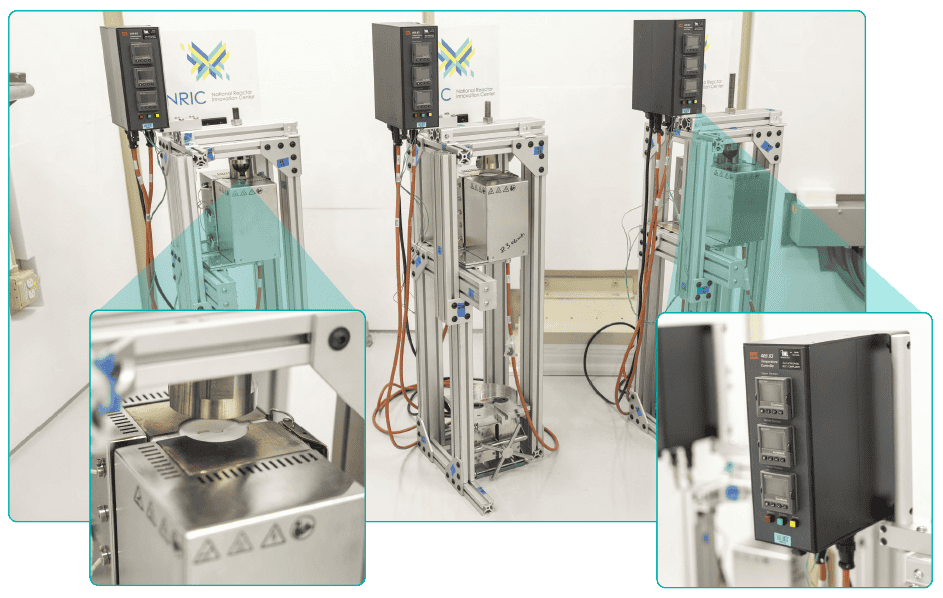
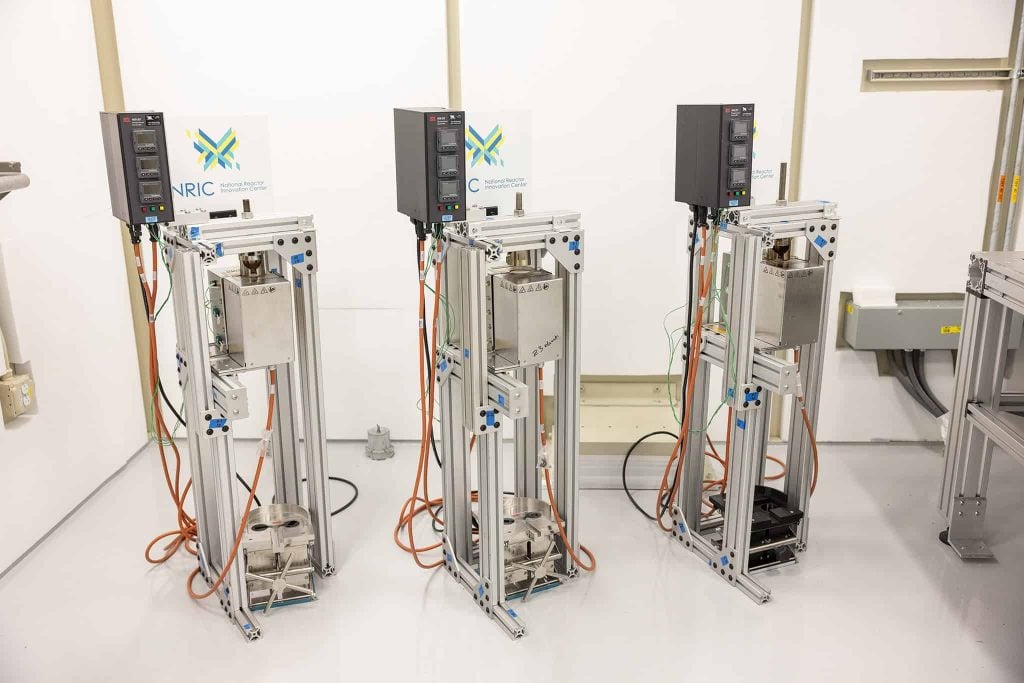
The Structural Properties Laboratory has three creep-testing frames sponsored by the National Reactor Innovation Center (NRIC).
These frames play an important role in the laboratory’s research mission.

What is creep?
Creep is the deformation of a material under mechanical stress over time, usually at high temperatures.

Why test creep?
Structural materials in reactors experience creep due to high temperatures and irradiation.
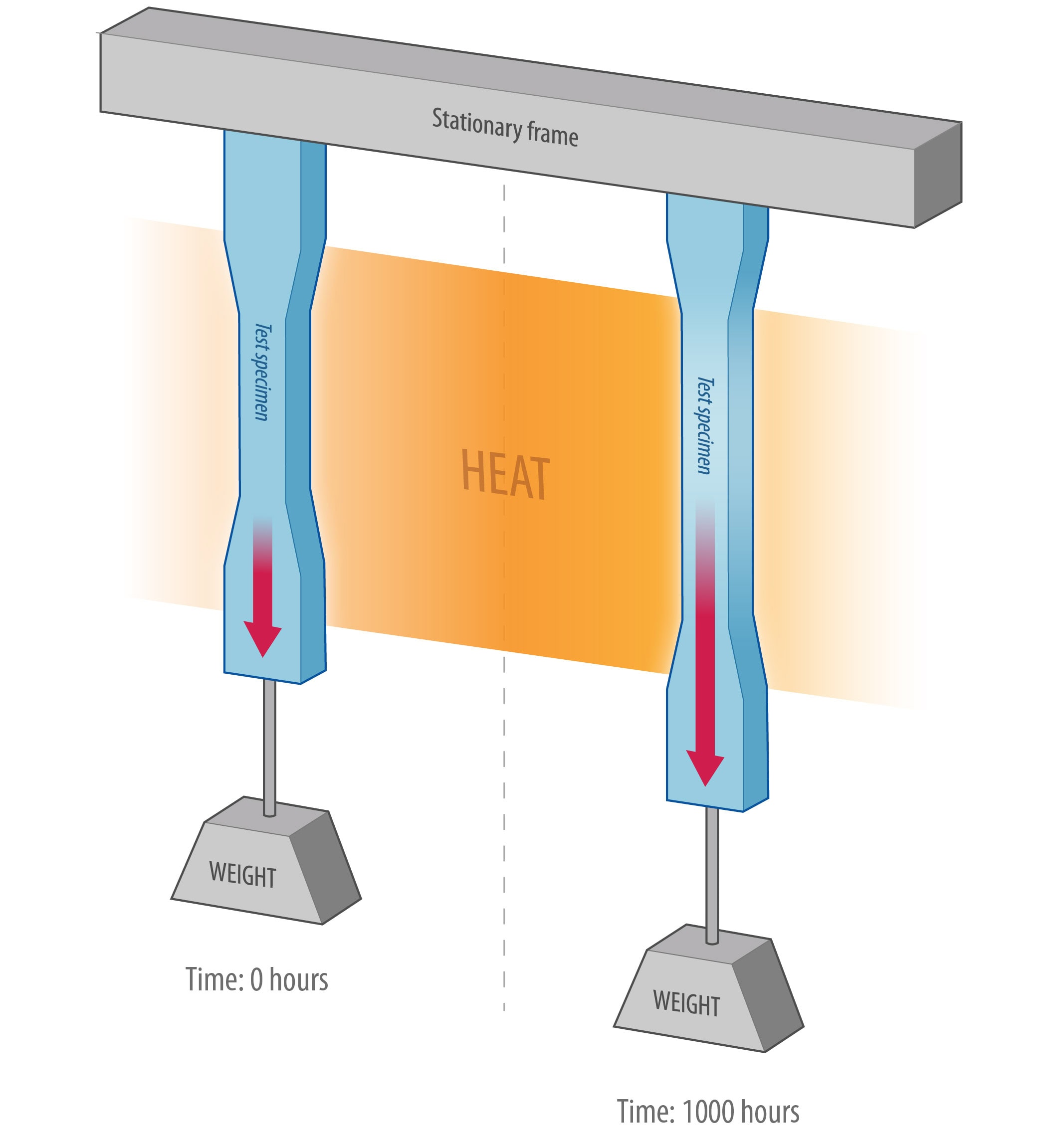
The development of a capability to test thermal creep deformation in irradiated materials is critical to certifying advanced materials and novel alloys for reactor systems. Thermal creep in irradiated materials can differ significantly in behavior from their unirradiated counterparts. NRIC designed and built three creep frames to accelerate advanced materials qualification and installed them into a shielded enclosure of the Structural Properties Laboratory (SPL).
NRIC creep frames provides industry access to in-hot cell creep tests using irradiated materials, allowing NRIC partners to accelerate the qualification of structural materials such as metallic alloys, ceramics, and others, produced through both traditional and advanced manufacturing methods.
Questions About Creep Testing?
Contact NRIC to learn more about the creep-testing frames at the Structural Properties Laboratory.