Digital engineering and digital twins can improve how nuclear energy assets are designed, constructed, operated and managed throughout their lifecycle. By connecting information across engineering disciplines and providing a digital representation of physical systems, these approaches give multidisciplinary teams a shared source of information for design and decision-making.
NRIC is developing and demonstrating digital engineering tools and practices to improve cost and schedule outcomes and support the economic deployment of demonstrated reactors. Combined with artificial intelligence and machine learning, these capabilities can also support predictive maintenance and advanced operational approaches.
Digital Engineering Thrust Areas
NRIC’s digital engineering work is organized around three thrust areas focused on improving how nuclear energy systems are engineered and operated.
01
Demonstrate and Deploy Facility-Scale Digital Twins
Connect engineering information, operational data and predictive models to develop and demonstrate digital representations of nuclear facilities.
02
Modernize and Improve Engineering and Operational Practices
Connect engineering systems and operational information to reduce manual processes and improve the way nuclear projects are designed and operated.
03
Augment the Nuclear Energy Engineering Process Using Artificial Intelligence
Apply artificial intelligence technologies to support nuclear energy engineering processes.
Guiding Principles
Reduce manual rework
Centralize project data
Track regulatory compliance
Accelerate engineering processes
Reduce project risk
Leverage artificial intelligence technologies
01. Demonstrate and Deploy Facility-Scale Digital Twins
The NRIC-DOME Digital Twin project demonstrates and deploys facility-scale digital twins that connect engineering information with data from physical systems. The work progresses from accessible design information to real-time operational data and predictive capabilities.
NRIC-DOME Digital Twin
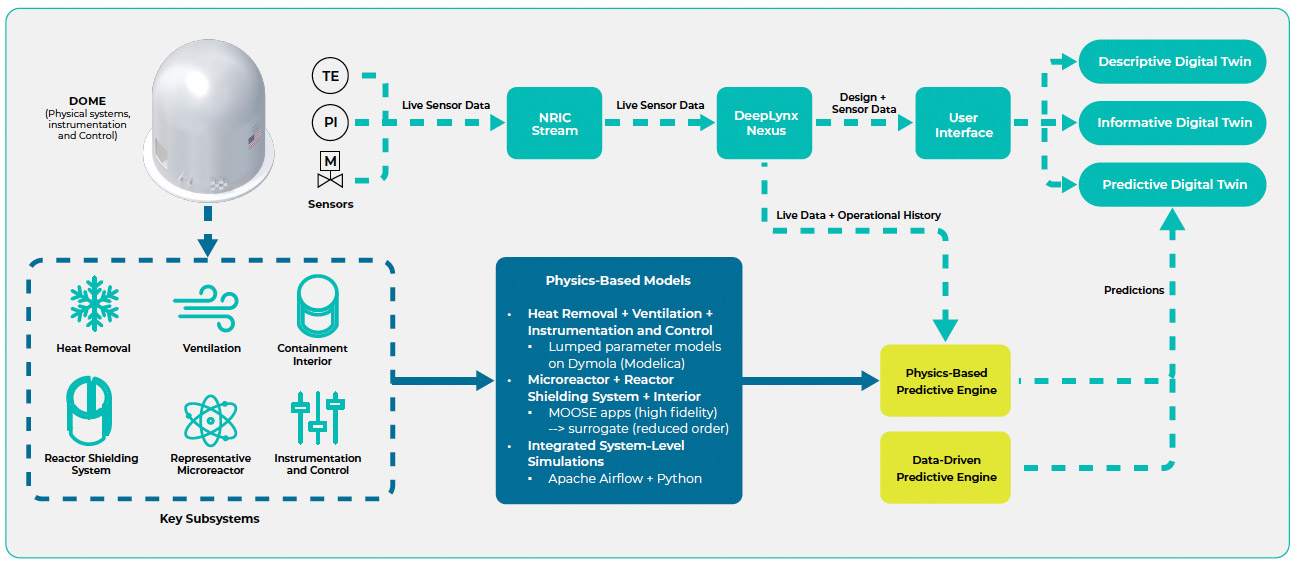
NRIC-DOME Digital Twin connects engineering information, operational data and predictive models to create a living digital representation of the DOME facility and its systems.
Descriptive
Provides accessible design information stored across engineering tools including requirements management and product lifecycle management software.
Informative
Incorporates real-time data, such as temperature measurements, from the operational asset.
Predictive
Uses models and operational data to predict future facility states and system response to changes in reactor conditions.
Digital Twin Architecture
Operational data from the DOME facility is used with physics-based and data-driven models to generate predictions of system behavior and future states.
DOME data and predictive models support descriptive, informative and predictive digital-twin capabilities.
02. Modernize and Improve Engineering and Operational Practices
NRIC is modernizing engineering and operational practices to improve productivity, reduce risk and increase reliability. This work focuses on synchronizing engineering information across tools and deploying digital procedures for DOME operations.
Modernize Engineering Practices
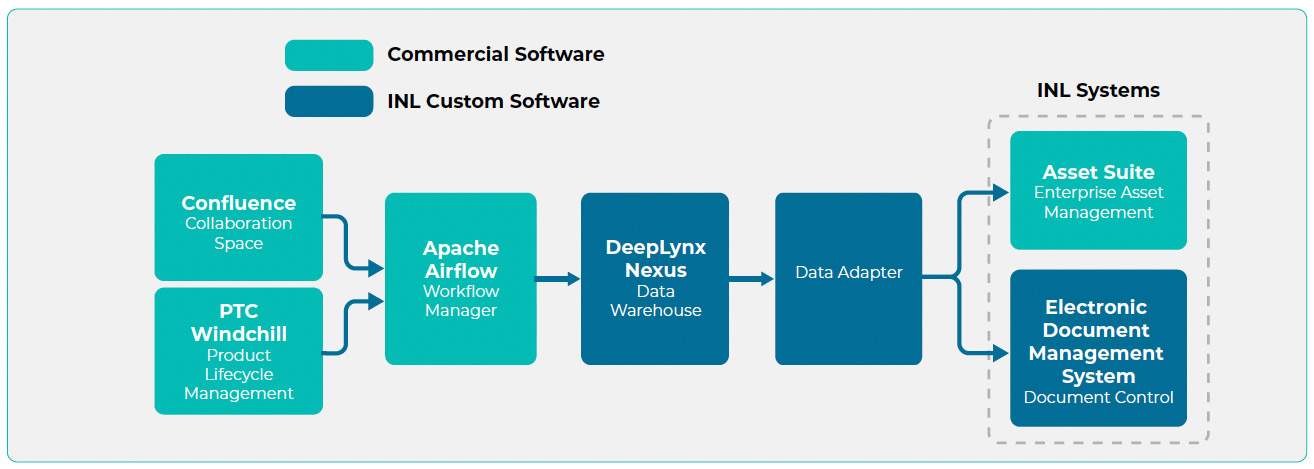
NRIC is synchronizing information across engineering tools using a digital thread. This enables engineers to design in PTC Windchill while maintaining compatibility with Asset Suite and INL’sElectronic Document Management System.
The digital thread connects project information across commercial and INL-developed software systems.
Modernize Operational Practices
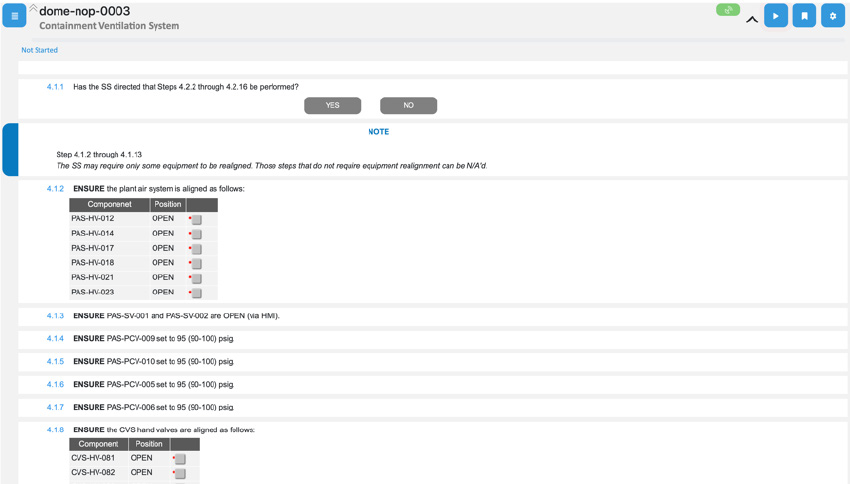
The NRIC-DOME Digital Procedures project deploys digital procedures for DOME operations to:
Modernize operations
Digitize and standardize work to improve efficiency and consistency.
Improve human performance
Provide clear, step-by-step guidance to support decision-making in real time.
Improve reliability
Reduce errors and variability to support safe and dependable operations.
DOME containment ventilation system operations. Click to enlarge.
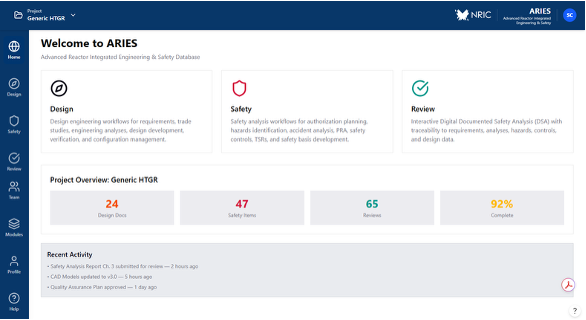
ARIES provides NRIC partners with a central platform that integrates systems engineering and safety workflows with design, safety and data systems.
The platform transforms nuclear design and safety into a structured, guided process intended to streamline work from concept to demonstration.
By connecting these workflows in one environment, ARIES is intended to improve the quality and consistency of design deliverables and reduce engineering timelines.