Nuclear Energy Launch Pad

Accelerate Advanced Nuclear Technology from Demonstration to Deployment

The Launch Pad provides streamlined pathways for developers wanting to demonstrate advanced nuclear energy technology and accelerate commercial deployment. Leveraging DOE’s authority and expertise, the program supports developers working across a range of nuclear technologies, including advanced reactors, fuel fabrication, fuel enrichment, fuel reprocessing, and and other related technologies supporting advanced nuclear deployment.

Built on the proven success of DOE’s Reactor and Fuel Line Pilot Programs, Launch Pad offers participants flexible technical and regulatory frameworks designed to fast-track paths from concept to deployment.

Industry Day Presentations & Video Recording

RFA & Industry Day submitted Questions & Responses

1. Is there an associated cost with transitioning from Pilot Program to Launch Pad? Is there an associated cost in participating in Launch Pad?

Developers selected under the Pilot Program are not required to transition from their active Pilot Program initiative to Launch Pad. If the developer is interested in submitting an application for a new facility meant for DOE Authorization, then they would apply to Launch Pad. There is no cost associated with submitting a Launch Pad application. Developers selected into Launch Pad may incur costs for NRIC Technical Program Manager Support, NRIC/INL/DOE expenses related to reviews, travel, and other expenses incurred, and site services associated with support for Launch Pad INL participants. 

Participants are not assigned a concierge. The Concierge team is a group of senior leaders from INL and DOE that are available to the Developers that are there to help developers remove barriers that the NRIC Technical Program Manager may not be able to solve at their level. Refer to GDE-55179 for additional details. 

No, there will not be any reset or setback for Pilot Program Participants who transition to Launch Pad so long as the scope and deliverables remain unchanged.

Applicants are welcome to apply to both Launch Pad INL and USA in separate applications. If the scopes are complimentary, there should be discussion of priority and interplay. If you are unsure of final siting location, INL vs USA, you may submit a single package that states priority and preferred path. Each unique facility that requires a DOE Authorization should be accompanied by its own Launch Pad RFA Application.

Yes, Launch Pad INL and USA selected Developers will be able to leverage and contract with many resources that can help enable them in navigating the pathway from DOE Authorization to NRC licensing. Participants in the Launch Pad program are expected to be deploying facilities and activities under DOE Authorization.

SF-328 provides instructions that will need to be completed by the developer for DOE to review the waiver request. This waiver should be filled out by the developer and sent directly to DOE. Contact NRIC through the RFA points of contact and NRIC will provide further instruction on submittal actions. 

A letter of intent is not required for Launch Pad INL applicants. If a developer has any written correspondence with INL/DOE about possible INL land acquisitions, that could be provided to assist the application evaluation team, but it is not required.

A company which has previously been accepted into a Pilot Program does not need to submit an application for their project to be transferred to Launch Pad. To transfer from the Pilot Program to Launch Pad, a company simply needs to submit a written request to either their DOE Federal Program Manager or their NRIC Technical Program Manager stating their desire to transfer.

Developers are required in their Launch Pad application to present a long‑term regulatory strategy as an NRC license holder (i.e. water rights, access to electrical infrastructure, etc) and commercialization plan, including how their DOE authorized deployment will support future NRC licensing. While Launch Pad is focused on enabling deployment under DOE Authorization, NRIC and DOE will assist selected developers in navigating NRC interactions as needed, particularly where NRC engagement supports long‑term commercialization goals. Early‑stage NRC licensing activities are not the primary focus of Launch Pad; however, NRIC and DOE will help selected developers understand regulatory pathways, coordinate information needs, and support analysis that enables an eventual transition from DOE Authorization to NRC licensing.

Federal and DOE procurement rules will not apply to companies that are privately funding their work and operating under their own design authority. However, if a vendor is using the national laboratory to procure good or services for the vendor, that procurement will be through the DOE approved procurement program.

A developer’s costs to be sited at Launch Pad INL or Launch Pad USA depend on the type of services they request. For Launch Pad INL, site‑associated costs may include (but are not limited to) Safeguards & Security support, power, water, emergency services, and other site services. Fees for these services are negotiated individually with each developer after DOE selection.

For Launch Pad USA, selected developers will work with DOE and NRIC to obtain cost estimates based on the specific services provided in support of their deployment.

If selected to Launch Pad INL, the DOE-Office of Nuclear Energy (DOE‑NE) is responsible for the Safety Basis Approval Authority, regardless of whether the deployment is on Launch Pad INL land set aside, or within the INL withdrawn land, or within an existing INL facility.

NRIC is working with the DOE-Idaho Field Office to address questions. It is requested that all Launch Pad questions be submitted through the RFA process, and NRIC will escalate or address questions with DOE as necessary.

Yes, but developers can also identify an alternative. As developers work through their Nuclear Safety Design Agreement (NSDA) per DOE-STD-1271, NQA-1 can be one of the quality assurance requirements identified or the developer can identify an alternate.

NRIC is here to support reactor developers and nuclear technology developers trying to bridge that gap between research and development and commercial deployment. NRIC Technical Program Managers will assist developers navigating the DOE Authorization process once selected into the Launch Pad Program. Launch Pad RFA applications are the responsibility of the developer.

NRIC evaluates Launch Pad developers on overall readiness for execution, and siting is one of the factors considered. While having a specific site identified is helpful, it is not required.

An informed shortlist of potential locations such as at the municipal or county level paired with a clear plan to finalize the site, is considered acceptable. Applicants who already have a site identified may score higher under readiness criteria, but a shortlist with a credible timeline is adequate for application purposes.

Yes.

Yes. Developers may partner with universities as they see fit to obtain subject‑matter expertise or other support. In fact, one of the first Launch Pad developers transitioned from the Reactor Pilot Program is a university–nuclear developer partnership.

The awardee is solely responsible for handling and disposal of any hazardous substances and wastes arising from activities under their Other Transaction Agreement. Decommissioning encompasses all activities to remove installed facilities and return the site to its original status (e.g., as a greenfield, brownfield, etc.). This includes used fuel removal, and management of spent nuclear fuel until either a final disposition pathway is available and/or DOE assumes ownership of the spent fuel through negotiation at either the Awardee site or other negotiated location. DOE will negotiate a disposition contract with the vendor prior to initial nuclear fuel receipt, defining title, transport, interim storage, and ultimate disposition responsibilities relating to the management of any spent nuclear fuel and any high-level radioactive waste produced pursuant to the agreement. 

Applicants are encouraged to be creative and cost‑effective in planning for backend spent fuel and other residual materials, including identifying the best long‑term storage approaches. 

The Launch Pad RFA is open on a continual, rolling basis. However, to support the initial review cycle, DOE and NRIC established a July 8, 2026 submission deadline to streamline the first wave of applicant evaluations.

Applications submitted after July 8 will still be accepted and will be reviewed regularly on a periodic basis, though the review cadence may change based on the quantity of applications received and other factors.

NRIC anticipates announcing initial selections of participants by August 19, 2026, but will be dependent upon the number of applications received and other factors. 

Launch Pad execution goals for participant deployments are still under evaluation. Until the Launch Pad goals are finalized, Participants should forward their most aggressive, achievable schedules for their deployments.

As developers work through their Nuclear Safety Design Agreement (NSDA) per DOE‑STD‑1271, NQA‑1 may be identified as one of the quality assurance requirements, or the developer may identify an alternate.

This means ISO 9001 or ISO 19443 may be acceptable, provided they are justified and agreed upon during the NSDA process.

A facility sited at INL under DOE Authorization may later transition to an NRC license. Siting on INL property does not prohibit or prevent this pathway. Applicants must address any additional siting‑related considerations and include a clear long‑term licensing strategy in their Launch Pad application describing how a DOE‑to‑NRC transition would be executed.

Part 57 and Part 53 are both NRC licensing approaches; however, all facilities deployed under Launch Pad are intended to initially operate under DOE Authorization, regardless of which NRC licensing pathway a developer intends to pursue later. Applicants may reference either Part 57 or Part 53 in their long‑term regulatory planning, but these NRC pathways do not apply to the initial DOE Authorization basis required for Launch Pad participation.

Launch Pad participants are expected to cover the costs of decommissioning and restoration of the site. The financial terms and potential investment strategies are at the discretion of the applicant. A high level of maturity and financial readiness in the decommissioning plan will strengthen an application. In general, restoration must return the site to reclaimed land. DOE may allow some of the site and structures to remain in place if they support DOE’s other missions and this may be negotiated. 

Selected participants will through their NSDA address their training and operational needs. In general, Launch Pad participants are responsible for providing and training their own operations staff. INL and other resources may be used for training or operational support on a contractual basis. 

There is no required DOE HMI standard; INL can offer guidance as needed.

INL has extensive but not exhaustive site characterization data including seismic, biological, cultural, water‑table, and other environmental information which Launch Pad participants may use for siting where available. Land for Launch Pad INL projects will be leased from DOE at fair‑market value. Additional details on contract terms would be established during negotiations following selection.

Development of the application is the financial responsibility of the Applicant. NRIC and DOE will not be providing funding for projects selected as part of Launch Pad and will not be providing funding or in-kind contributions for cost sharing. If selected, the Applicant will be responsible for the costs associated with, but not limited to, designing, manufacturing, constructing, operating, decommissioning, and waste streams related to its facility(s).  The contingency funding calculation will be dependent on the applicant deployment planning. 

Launch Pad INL has available power, water, fiber, and other associated infrastructure, and more in planning. As part of a Launch Pad application, applicants are expected to submit their utility and infrastructure requirements for all deployment and operational phases. This will assist in the siting process.

DOE‑ID is the only DOE Site Office authorized to issue DOE Authorization for Launch Pad deployments. This applies whether a facility is sited at INL or at another DOE site. The local site office and host laboratory still play an important support role, including land‑use coordination, facilities access, local regulatory interfaces, and providing site‑specific requirements and resources needed for deployment.

Applicants are welcome to propose fuel fabrication and feedstock as long as it is not precluded through US policy and/or legislation.

All Launch Pad work is entirely privately funded and estimated on a case-by-case basis.

Developers can access NRIC support without going through Launch Pad. If an applicant already holds an OTA and also has scope under another pending RFA, NRIC recommends evaluating whether these efforts should be merged, as both fall outside the Launch Pad mechanism. If no new scope is being proposed under Launch Pad, developers should consider alternative pathways. NRIC can assist in identifying the appropriate mechanism, and developers may contact NRIC@inl.gov with specific questions.

DOE and the developer will determine applicable building and safety codes during the Nuclear Safety Design Agreement (NSDA) process. The NSDA establishes the project’s code of record, and DOE allows flexibility in code adoption for projects with appropriate justification. 

Developers may apply to both Launch Pad INL and Launch Pad USA. If a developer is unsure of their preferred siting location, they are encouraged to apply to Launch Pad USA, and the location can be updated later through discussions with DOE and NRIC.

Yes. DOE can amend an existing OTA if needed. Developers may also submit multiple applications. For any facilities that will be separate from each other and require their own OTA and DOE Authorization, a developer should submit an individual application for each.

DOE is evaluating options to streamline and expedite the foreign ownership review process for SPPs. DOE recognizes that applicants entering Launch Pad will need SPPs with BEA as quickly as possible and is actively assessing ways to optimize and shorten the current review timelines.

DOE will examine the need for new additional NEPA categorical exclusions for fuel line facilities.

DOE has not established a predefined labor agreement requirement for OTAs. Whether agreements such as Davis–Bacon apply depends on the specific circumstances of the project. DOE will evaluate labor‑agreement applicability on a case‑by‑case basis.

There is no number for the OTA guide. 

NRIC and DOE have documentation available for developers planning to deploy at INL. NRIC provides an interface plan template that includes a menu of services to help estimate anticipated costs. If selected for Launch Pad INL, NRIC will work with the developer to identify scope and develop a cost estimate; INL does not use flat fees but can provide reasonably accurate estimates. A similar process will apply for DOE safety document reviews performed under DOE Authorization.

GDE‑55179 is available on the Launch Pad RFA page on sam.gov; however, each update to the RFA generates a new hyperlink, which may cause older links to display outdated information. Applicants should verify they are viewing the current materials by using the “Version” dropdown at the top of the RFA posting and selecting the latest version. Because revisions may be posted at any time, applicants are encouraged to check this dropdown regularly to ensure they are referencing the most up‑to‑date guidance.

A “sufficiently mature design,” as defined in GDE-55179, is not tied to a specific completion percentage or TRL threshold. Instead, reviewers assess whether the applicant’s design and supporting analyses are developed enough to begin DOE Authorization activities, including near term initiation of the Nuclear Safety Design Agreement (NSDA) under DOE-STD-1271. A design is considered sufficiently mature when it is technically credible, supported by a clear and organized deliverables list aligned to DOE requirements, and backed by a project plan, risk awareness, and resources adequate to progress without major redesign. Applicants should demonstrate readiness to develop and submit required safety basis documentation, including the Final Documented Safety Analysis needed to support operations. 

Launch Pad INL participants with an OTA may have the option for BEA to be the design authority. While NRIC and INL may provide technical assistance and support throughout the DOE Authorization process, they do not assume design authority for Launch Pad USA projects. 

Developers are also responsible for providing and training their own operators. INL/BEA personnel may support training or operational activities only on a full cost‑recovery basis.

The Launch Pad RFA is open on a continual, rolling basis. However, to support the initial review cycle, DOE and NRIC established a July 8, 2026 submission deadline to streamline the first wave of applicant evaluations.

Applications submitted after July 8 will still be accepted and will be reviewed regularly on a periodic basis, though the review cadence may change based on the quantity of applications received and other factors.

Costs associated with DOE Authorization will vary based upon the maturity and complexity of the design.

There is no standalone public document outlining the costs associated with DOE Authorization. All Launch Pad work is performed on a full cost‑recovery basis, and costs are developed specific to each applicant’s scope. 

Yes.

A phased approach using an existing INL facility followed by a new constructed facility may be possible if the newly constructed facility at INL would be for continued demonstration of the same demonstration performed in an existing INL facility, but it could require separate Launch Pad applications if the two phases are trying to demonstrate separate technologies. This could require individual OTAs and distinct DOE authorizations. Each OTA requires its own Launch Pad application. If the new construction would be for immediate commercial use, an NRC license would be required.

No. DOE Authorization is site‑specific and cannot be applied across multiple locations, allowances could be reviewed if the phased approach is with a regional site area such as the Idaho National Laboratory (i.e. one phase in an existing INL facility and follow-on continuation of the demonstration in a newly constructed facility). A phased approach that includes facilities in more than one state or site would require separate Launch Pad applications—one for each facility—so DOE can issue distinct OTAs and authorizations appropriate to each location. Developers should clearly define the purpose of each phase so DOE can determine how many applications and authorizations are required.

A milestone‑based investor commitment letter can be acceptable as long as it provides a clear, credible funding pathway that aligns with the project schedule. While having all funds fully committed at the time of application is ideal, applicants are not required to hold the total project cost in escrow. Developers should describe how committed tranches support near‑term execution under DOE Authorization and provide sufficient confidence that remaining funds will be available when needed.

Recommend you provide a plan for funding to demonstrate you have enough committed funding to get you through the initial design phase and long lead items.  

Expertise, capabilities & facilities

NRIC is developing a comprehensive catalog of expertise, capabilities and facilities available at universities and national laboratories to participants in the Nuclear Energy Launch Pad program. 
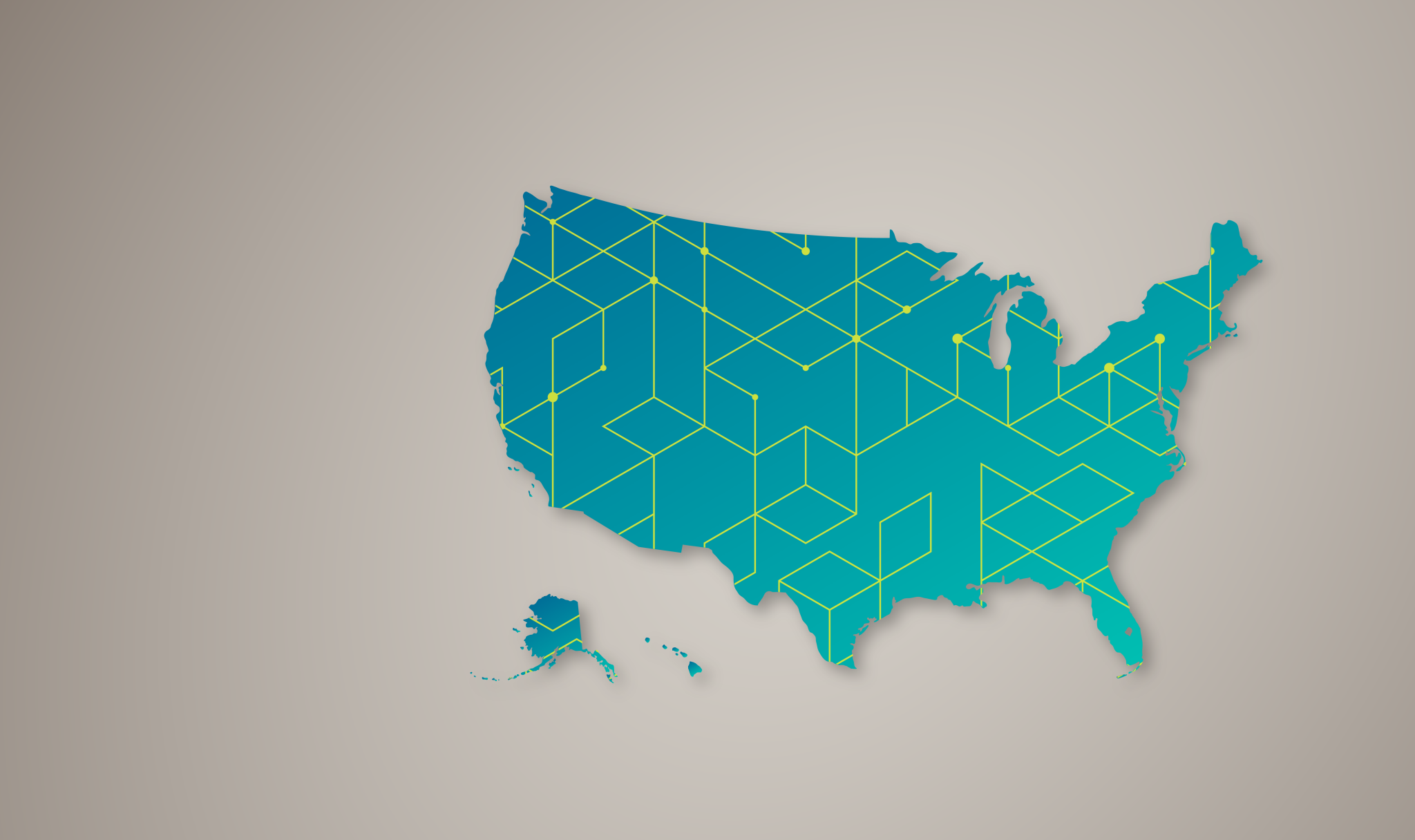
*Funding is not available through DOE or NRIC. A contract vehicle will be required between developer and university or national laboratory.

Choose your pathway

Launch Pad INL

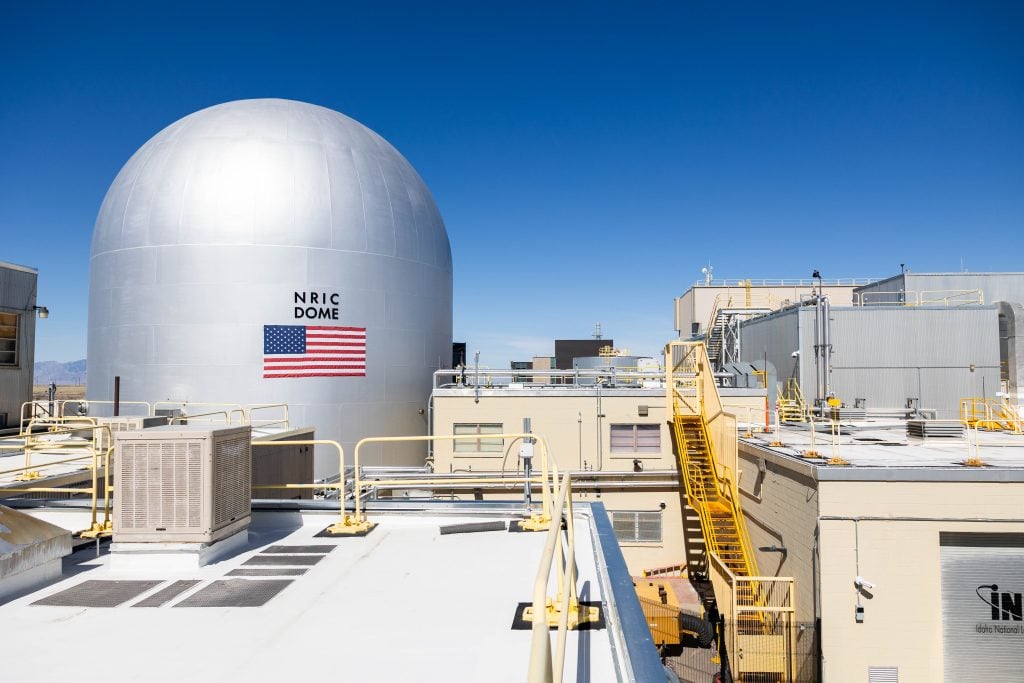
Demonstrate your technology at Idaho National Laboratory with access to dedicated land, existing infrastructure, and on-site nuclear expertise.

Launch Pad USA

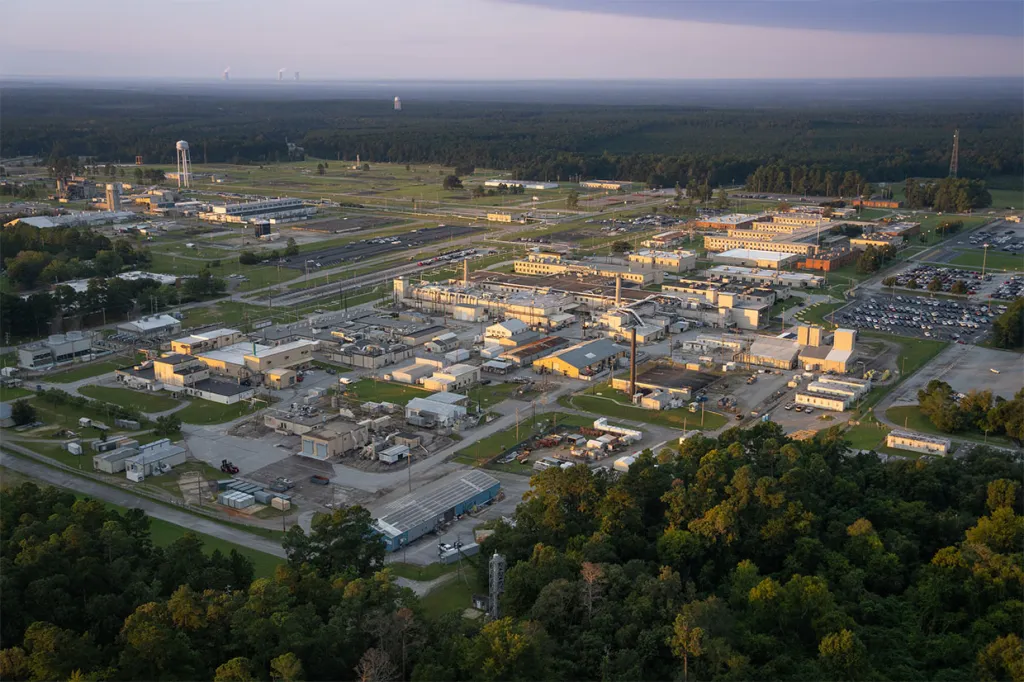
Demonstrate at other DOE sites, national laboratories, or non-federal locations nationwide—with the flexibility to leverage regional and site-specific advantages.

Ready to get started?

Contact us

The Launch Pad team is ready to help you explore which pathway fits your demonstration project.

How to apply

Launch Pad applications will be accepted and evaluated on a continual basis. Application requirements and review criteria will mirror those used in the U.S. Department of Energy’s Reactor and Fuel Line Pilot Program RFAs. This will ensure companies that have already applied for the pilot programs can seamlessly transition to the Launch Pad without reapplying.

Interested applicants must submit their responses to the Nuclear Energy Launch Pad RFA by June 19 at 5 p.m. MDT. The deadline for applications is July 8 at 5 p.m. MDT.

Frequently Asked Questions

What is the selection and application framework for those developers wishing to participate in the Launch Pad initiative?

To participate, developers must submit applications to NRIC. The Request for Application (RFA) will be accepted and evaluated on a continual basis. Application requirements will mirror the RFA of DOE’s Reactor and Fuel Line Pilot Programs. Applications already submitted to DOE’s Pilot Programs may be transferred to the Launch Pad and will not need to reapply.

All applicants must meet the following criteria to be eligible. NRIC will use all available tools

and authorities to verify eligibility and alignment with the strategic interests and foreign policies of the United States.

Applicants must be either:

1. Organized, chartered, or incorporated (or otherwise formed) under the laws of a particular state or territory of the United States or under the laws of the United States, have majority domestic ownership and control, and a physical location for business operations in the United States; or

2. Legally formed under the laws of a state or territory of the United States, including as a subsidiary of a foreign entity, and have a physical location for business operations in the United States; such entities will be considered foreign and must submit an explicit waiver request for foreign entity participation at the time of application. The information required for a waiver request can be found on FedConnect at the same location as this RFA.

SAM.gov Registration: SAM registration is required to be eligible for selection. Registration must remain active throughout the term of the project

No, DOE will not provide funding to selected participants. DOE will be providing resources as part of the application review and selection. DOE costs for other activities associated with DOE authorization or NRC licensing, as part of this initiative, will be borne by the participant and will be delineated in the agreement instrument between the DOE and the participant. If the participant elects to engage Idaho National Laboratory or other national laboratories, those costs will be borne by the participant.

One option is for participants to enter into an agreement directly with DOE under an Other Transaction Authority (OTA) contract and function as the design authority for their facility. Another option for developers pursuing DOE Authorization would be to enter into a Strategic Partnership Project (SPP) or Cooperative Research and Development Agreement (CRADA) with

Battelle Energy Alliance (BEA), the Management and Operations Contractor of INL, for BEA to function as the Design Authority for their facility. If the developer enters into an OTA with DOE it does not preclude a contract with BEA for support activities. Other contracting mechanisms will be explored for those participants within the Launch Pad U.S.A. pathway.

The required information and review criteria for NRIC’s Launch Pad will mirror the requirements in the Reactor and Fuel Line Pilot Programs RFAs. This will ensure that companies who have already applied for the Pilot Programs can transition to NRIC Launch Pad and do not need to reapply.