
ANL Fact sheet
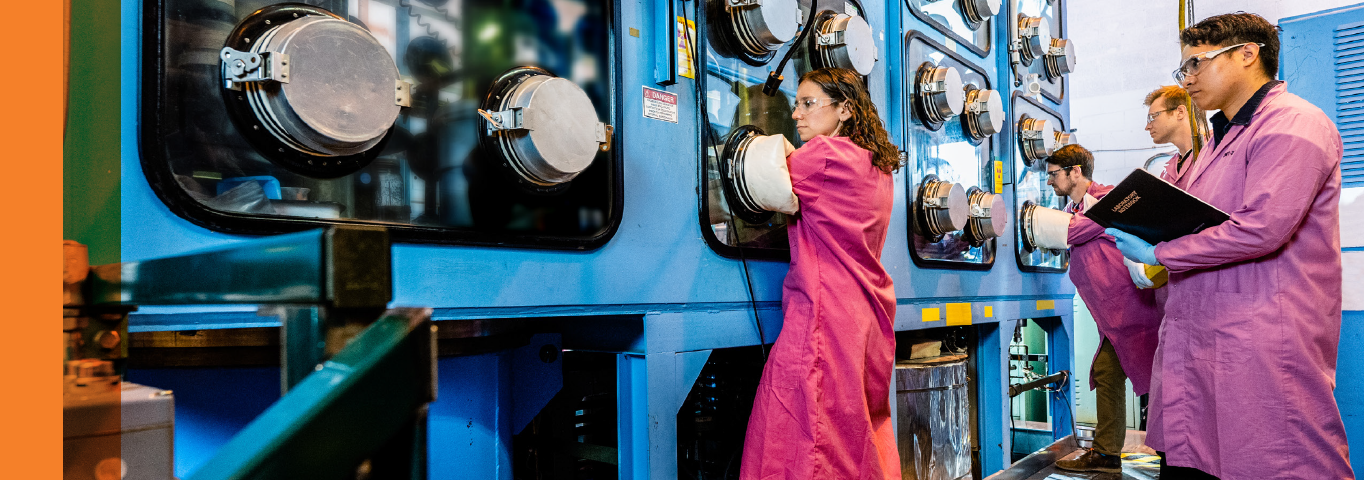
Argonne National Laboratory, the birthplace of nuclear power, possesses an extensive and diverse array of research capabilities supporting nuclear energy technology and applications. Through a unique combination of applied research, basic science, world-class facilities, specialized expertise, and cross-disciplinary collaboration, Argonne accelerates the development and deployment of innovative advanced nuclear technologies that support a resilient, reliable, secure and sustainable energy future for the United States.
Launch Pad USA At Argonne
Spanning 1,500 acres, Argonne provides nuclear technology and research facilities, applied energy laboratories, and science user facilities that support the complete innovation pipeline—from early-stage discovery through technology development to commercial deployment.
Key Benefits
More than 155,000 square feet of experimental space with room for expansion
Nuclear energy facilities spanning the full fuel cycle and reactor technology development
Applied energy facilities for critical materials, energy storage, and grid integration
DOE Office of Science user facilities including the Advanced Photon Source
High-performance computing capabilities
Support in navigating DOE orders and standards
Flexible contracting framework through DOE’s M&O contractor
Nuclear Energy Research
Advanced Reactor Systems and Components
Argonne operates comprehensive facilities for developing and testing advanced reactor technologies, with particular strength in liquid metalcooled systems, thermal hydraulics, and component-scale demonstration that bridge fundamental science to commercial deployment.
Capabilities
- Advanced reactor demonstration test beds
- Reactor component technology development
- Reactor physics and thermal-hydraulics
- Advanced modeling and simulation
- Licensing and safety analysis support
- Safeguards, security, and nonproliferation
- Space nuclear power
- Fusion power
Facilities
- Mechanisms Engineering Test Loop (METL)
- Natural Convection Shutdown Heat Removal Test Facility (NSTF)
- Thermal Hydraulic Experimental Test Article (THETA) Facility
- Core Alloy Flow and Erosion (CAFÉ) Experimental Facility
- Pressure Drop Experimental Loop for Investigations of Core Assembly in Advanced Nuclear Reactors (PELICAN)
Nuclear Materials Science and Characterization
Argonne maintains world-leading capabilities in nuclear materials science, from ion beam irradiation and post-irradiation examination to advanced characterization using electron microscopy and synchrotron X-ray techniques that reveal radiation damage mechanisms at the atomic scale.
Capabilities
- Irradiated nuclear fuel and materials characterization
- Structural nuclear material fabrication, testing, analysis,
and code qualification - Materials irradiation
- Non-irradiated fuel and materials characterization
- Irradiation testing
- Irradiated structural materials performance
- X-ray science and materials characterization and performance
- Advanced materials and manufacturing
- Robotics and autonomous systems
Facilities
- Irradiated Materials Laboratory (IML) Hot Cells
- Intermediate Voltage Electron Microscope (IVEM)
- Materials Development Laboratory
- Additive Manufacturing Laboratory
- Materials for Harsh Environments Synthesis and Characterization Lab
- Advanced Photon Source (APS)
- Argonne Tandem Linac Accelerator System (ATLAS)
- ATLAS Materials Irradiation Station (AMIS)
- Activated Materials Laboratory
- Materials Corrosion Laboratory
- Robotics and Automation Laboratory
Nuclear Fuel Cycle and Fuel Development
Argonne pioneered advanced fuel cycle technologies and continues to lead in fuel fabrication and qualification, aqueous and pyroprocessing separations, and analytical chemistry that enable sustainable nuclear energy systems.
Capabilities
- Nuclear fuels fabrication
- Fuel recycling and nuclear materials management
- Radioanalytical chemistry
- Radioactive material disposal
- Nuclear waste form development
and qualification - Actinide chemistry
Facilities
- Fuel Development and Qualification Facilities
- Pyrochemical Process Development, Engineering, and Pilot-scale
Test Facilities - Aqueous Recycling Development and Demonstration Laboratories
- Centrifugal Contactor Testbed Facility
- Analytical Chemistry Laboratories
- Additive Manufacturing Facility for Equipment Prototyping
- Materials Corrosion Laboratory
Molten Salt Systems
Argonne advances molten salt chemistry, thermophysical properties, and materials corrosion science and technology through experimental facilities that enable fundamental studies of salt behavior, impurity effects, and materials degradation mechanisms critical to molten salt reactor development and operation.
Capabilities
- Molten salt chemistry and thermophysical properties
- Materials corrosion and
compatibility testing - Advanced modeling and simulation
- Sensor and instrumentation development
Facilities
- Molten Salt Flow Loop and Sensor Facilities
- Thermophysical Properties Laboratory (TPL)
Isotopes and Radiochemistry
Argonne operates accelerator-based facilities producing isotopes for medical, industrial, and research applications, supported by radiochemical laboratories that enable isotope separation, purification, and characterization.
Capabilities
- Radioanalytical chemistry
- Focused basic research
- Radiobiology
Facilities
- Low Energy Accelerator Facility (LEAF): Low Energy Electron Accelerator, Low Energy Target Station, LEAF Hot Cell Facility, Isotope Target Preparation Laboratories, Van de Graaff Accelerator
- Isotope Production, Separation, and Purification Labs
Severe Accidents and Safety Analysis
Argonne conducts experimental research on severe accident phenomena to support advanced reactor safety analysis, accident mitigation strategies, and regulatory decision-making that ensure the safe deployment of current reactor fleet and next-generation nuclear technologies.
Capabilities
- Light water reactor severe
accident experimentation - Molten salt severe accident experiments and analysis
- Nuclear safety, security and radiological response
- Advanced reactor regulatory
support and analysis
Facilities
- Severe Accident Testing Laboratory: Molten Core Concrete Interaction Facility, Cell 5—Zero Power Reactor Containment Facilities
- Molten Salt Reactor Accident Test and Analysis Facility
- Radiological Assistance
Program facilities
Integrated Energy Research
Critical Materials and Energy Storage
Argonne leads the world in battery technology development and critical materials and minerals research and analysis, operating facilities that span the full lifecycle from materials discovery to end-of-life recycling, reducing dependence on foreign supply chains and advancing domestic manufacturing.
Capabilities
- Critical materials and minerals
- Advanced materials and manufacturing
- Mechanical materials processing and deconstruction
Facilities
- Materials Engineering Research Facility (MERF)
- ReCell Center
- Minerals to Materials Critical Material Research Facility (METALLIC)Battery Post-Test Facility
- Electrochemical Analysis and Diagnostics Laboratory
- Electrochemical Discovery Lab (EDL)
Energy Systems Integration and Advanced Mobility
Argonne develops and demonstrates technologies for integrating advanced energy systems, from electric vehicle charging infrastructure to grid-scale energy storage and distributed generation.
Capabilities
- Advanced transportation
- Distributed energy systems
- Utility and grid capabilities
- Deployable infrastructure systems
Facilities
- Advanced Mobility Technology Laboratory
- EV-Smart Grid Interoperability Center
- Smart Energy Plaza (SEP)
- Tribology Laboratory
- Distributed Energy Research Center
Advanced Computing: AI, HPC and Modeling/Simulation
Argonne’s computing capabilities enable advanced modeling and simulation across all nuclear energy research areas, from reactor physics and thermal hydraulics to materials performance and fuel cycle analysis, accelerating innovation through computational discovery.
Capabilities
- Advanced modeling and simulation
- Decision sciences
- Systems analysis and design sciences
- Energy economics
- All-source intelligence analysis
Facilities
- Argonne Leadership Computing Facility (ALCF)
- Center for Energy, Environmental, and Economic Systems Analysis
- Transportation Research and Analysis Computing Center
DOE Office Of Science And Office Of Nuclear Energy User Facilities
Argonne operates several DOE Office of Science user facilities available to researchers from academia, industry, and other national laboratories, providing access to world-class scientific instruments and expertise.
KEY FACILITIES
Argonne leads the world in battery technology development and critical materials and minerals research and analysis, operating facilities that span the full lifecycle from materials discovery to end-of-life recycling, reducing dependence on foreign supply chains and advancing domestic manufacturing.
- Advanced Photon Source (APS): One of the world’s most productive X-ray light source facilities, delivering ultra-bright X-ray beams for materials characterization and fundamental research that reveal atomic-scale structure and dynamics. Includes Activated Materials Laboratory (AML).
- Argonne Tandem Linac Accelerator System (ATLAS): A superconducting linear accelerator facility for nuclear physics research and materials irradiation studies that advance understanding of nuclear structure and radiation effects.
- Argonne Leadership Computing Facility (ALCF): A world-class facility providing supercomputing and AI resources to the scientific and engineering community to accelerate the pace of discovery and innovation in a broad range of disciplines.
- Intermediate Voltage Electron Microscope (IVEM): A unique facility combining ion beam irradiation with in-situ transmission electron microscopy for real-time observation of radiation damage evolution at the nanoscale.
Contact Us
Christopher Grandy
Operations Officer (Interim)
Nuclear Technologies and National Security